
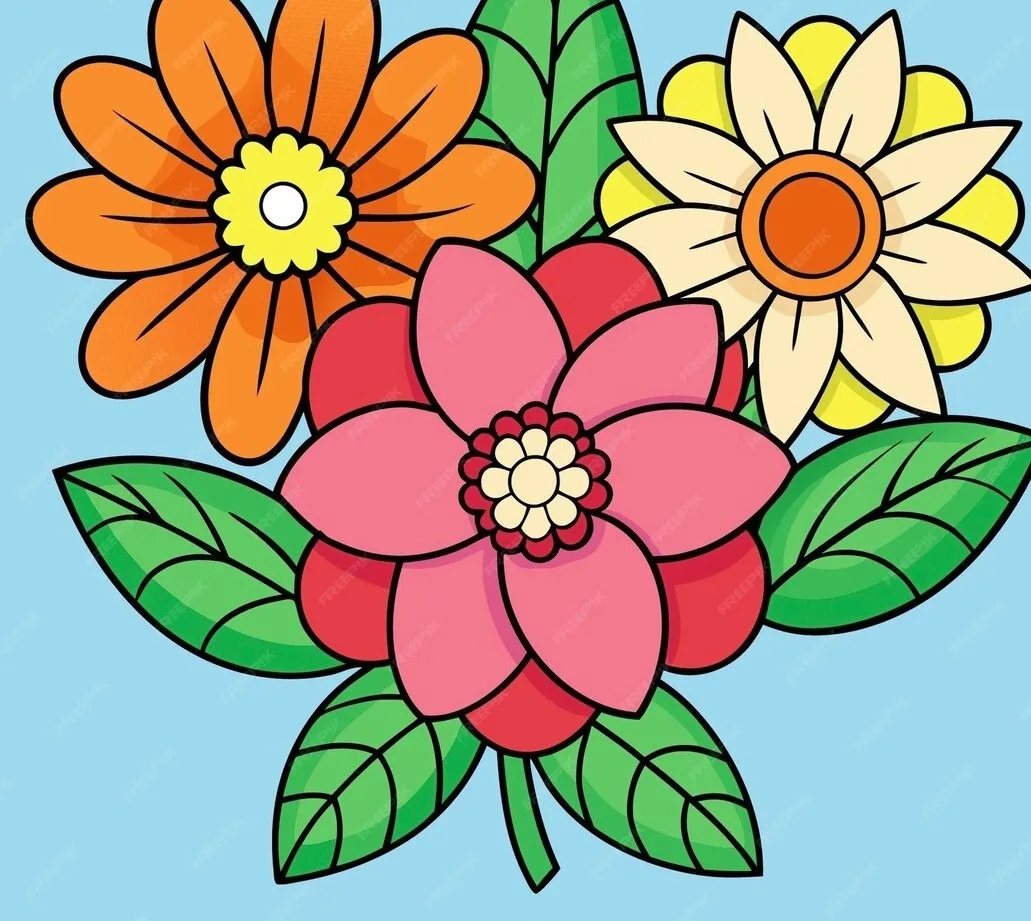
Blooming Paper Flowers: A Simple Water Science Activity for Kids
This fun experiment is perfect during spring and summer, but it can be enjoyed any time you want a quick, hands-on science activity that doesn’t make a big mess.
Materials
Markers or crayons
Scissors
A shallow dish of water (a bowl, tray, or container)
A printable flower template (You can find mine here), or just draw flower shapes with 4–6 petals
Steps
1. Create the flowers: use the templat and paint the flowers.
2. Fold the petals
Carefully fold each petal toward the center of the flower. Try not to press the folds too tightly. Soft folds allow the paper to absorb water more easily.
3. Place the flower on the water.
Gently set the folded flower on the surface of the water. After a few moments, the petals will slowly unfold, making the flower appear to bloom.
Extra Ideas to Try
- Write a secret message or draw a tiny picture in the middle of the flower that will be revealed when it opens.
- Experiment with different shapes, such as stars or hearts, to see if they “bloom” too.
- Test different materials and compare how quickly they open.
What’s the Science Behind It?
This activity demonstrates a scientific process called capillary action, along with how paper absorbs water.
Paper is made from plant fibers. Between these fibers are tiny spaces that can draw in water. When the paper touches the water, the liquid travels through these small spaces. As the fibers soak up the water, they expand and swell.
Because the petals were folded inward, the swelling fibers cause the folds to gradually open, which makes the paper flower look like it’s blooming.
There is also a simple physics idea involved. The folded flower stores potential energy. Once the paper absorbs water, that stored energy is released as the petals move and unfold.
Turning This Activity into a Learning Experience
You can easily expand this experiment into a mini lesson.
For younger children practice naming colors, count the petals and talk about shapes
For older kids predict how different paper types (tissue paper, newspaper, cardstock) might change the blooming speed, test the predictions and compare the results. You may also add some math and measure how long each flower takes to open. Record and graph the results. Connect it to nature,
discuss how real plants and flowers depend on water and explore how sunlight and water affect plant growth during spring.
Have fun ! 🌸